(772) 297-0543

What is the best lubricant to use on a sliding glass door track

Same-Day Service
Free Estimates
All Major Brands
Residential & Commercial
Licensed & Insured
TL;DR

Silicone-based spray lubricants are the best choice for sliding glass door tracks, especially in South Florida's humid climate. Avoid oil-based products and WD-40, which attract dirt and create sticky buildup. Regular lubrication every 3-6 months helps prevent costly repairs on heavy impact glass doors.

Sliding door repair in River Park FL

The best lubricant for sliding glass door track maintenance is a dry silicone spray or PTFE-based product specifically designed for door hardware. These lubricants resist the salt air and humidity common in Port St. Lucie and River Park, keeping tracks clean and free-moving. Using the wrong product can actually make your doors harder to operate and accelerate wear on rollers.

South Florida homes built after 2002 typically have impact-rated sliding doors weighing 150-300 pounds per panel, which puts significant stress on tracks and rollers. Regular maintenance with the right lubricant costs far less than replacing worn components. Professional preventive maintenance runs $89-$159 and can extend your door's lifespan by years.

Why Silicone-Based Lubricants Work Best in South Florida

Silicone spray lubricants create a dry, slippery coating that doesn't attract sand, dust, or debris. This matters in St. Lucie County where fine sand particles and salt residue constantly find their way into door tracks. Oil-based lubricants turn these particles into abrasive paste that grinds down aluminum tracks and plastic rollers.

The humidity in River Park and surrounding areas causes oil-based products to break down and become sticky within weeks. Silicone-based formulas maintain their properties in temperatures from 40°F to 400°F and won't gum up in Florida's heat. Brands like PGT, Andersen, and CGI specifically recommend silicone lubricants in their maintenance guides.

Recommended Silicone Lubricant Products

3-IN-ONE Garage Door Lubricant and Blaster Silicone Spray both work exceptionally well on sliding door tracks. These products come with precision straws that let you target the track channel without overspray. A single can typically lasts 12-18 months for the average homeowner maintaining two or three sliding doors.

PTFE-Based Alternatives

PTFE (Teflon) dry lubricants offer similar benefits to silicone and work particularly well on doors with worn tracks. These products leave an ultra-thin coating that reduces friction without buildup. They cost slightly more than silicone sprays but can last longer between applications in high-use doors.

Lubricants to Avoid on Your Sliding Door Tracks

WD-40 is the most commonly misused product on sliding glass doors, despite being a poor long-term lubricant. While it initially makes doors glide smoothly, WD-40 is actually a solvent and light oil that attracts dirt and leaves sticky residue. Within a month, your tracks will be harder to operate than before you started.

Vegetable oils, motor oils, and petroleum-based greases create similar problems and can stain your flooring when they drip. Graphite powder, while effective on locks, makes a black mess on tracks and transfers to carpets and tile. Wax-based products build up in grooves and actually increase friction on heavy impact glass panels weighing 200+ pounds.
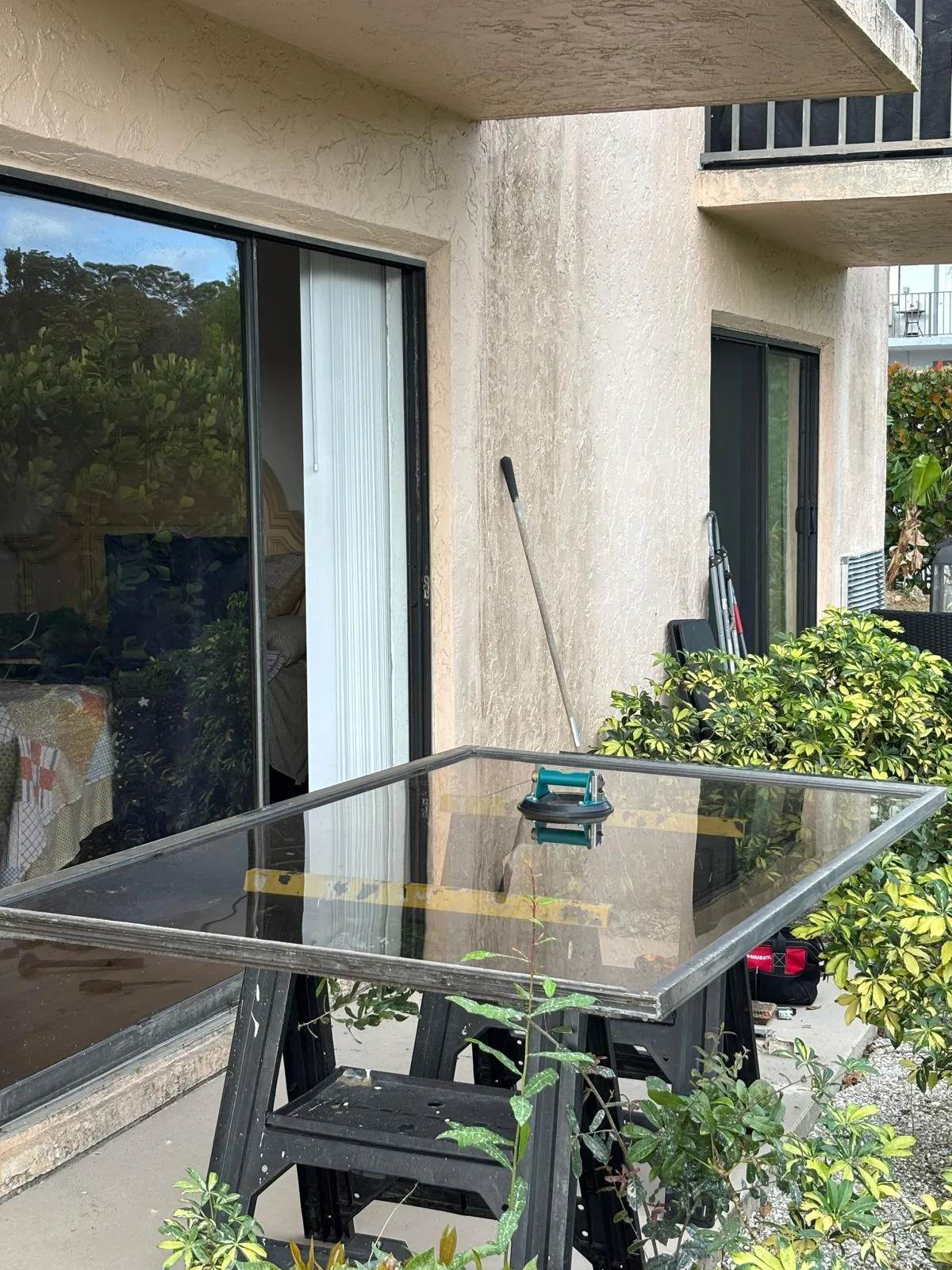
Sliding door components being serviced in South Florida

How to Properly Apply Track Lubricant

Start by vacuuming the track with a crevice tool, then wipe it down with a damp cloth to remove all debris. This step is critical because lubricating over dirt just seals the grit against your rollers. For stubborn buildup in JELD-WEN or Milgard tracks, use a stiff brush and mild detergent before drying completely.

Apply a thin, even coat of silicone spray along the entire track length, focusing on the raised rail where rollers make contact. Move the door back and forth several times to distribute the lubricant, then wipe away any excess with a clean rag. Less is more with track lubrication, a light coating every 3-6 months beats heavy application once a year.

Special Considerations for Impact Glass Doors

Impact-rated doors common in Port St. Lucie since 2002 require extra attention because their weight accelerates wear. Check that rollers spin freely before lubricating, worn or seized rollers need replacement rather than lubrication. If your door still drags after cleaning and lubricating the track, the rollers or alignment likely need professional attention.

Signs Your Door Needs More Than Lubrication

If lubricating the track doesn't restore smooth operation, you may need roller replacement ($199-$299 per panel) or track repair ($149-$349). Visible damage to the aluminum track, rollers that don't spin, or doors that bind in certain positions indicate mechanical problems. Attempting to force a damaged door can bend the frame or crack impact glass, creating expensive repairs.

Gaps around the closed door, difficulty locking, or doors that swing open on their own suggest alignment issues ($99-$199 to correct). These problems often develop gradually in Pella and Andersen doors as the frame settles or foundation shifts slightly. Addressing alignment early prevents accelerated wear on rollers and tracks.

Professional Maintenance Services in Port St. Lucie

Marco Delgado at Port St. Lucie Sliding Door Repair has serviced hundreds of doors throughout River Park and St. Lucie County since 2018. Professional maintenance includes deep track cleaning, proper lubrication, roller inspection, and adjustment for $89-$159. This service catches small problems before they become major repairs and keeps heavy impact glass doors operating smoothly year-round.

If you're unsure whether your door needs simple maintenance or component replacement, call (772) 297-0543 for an honest assessment. Marco serves Port St. Lucie as a solo operator focused on quality work rather than upselling unnecessary services. For residents in Martin County to the north, treasurecoastslidingdoorrepair.com provides similar expert service.

Frequently Asked Questions

How often should I lubricate my sliding glass door track in Florida?
Lubricate your sliding door track every 3-6 months in South Florida's humid, salty environment. Homes near the coast or with heavy door use may benefit from quarterly lubrication. Always clean the track thoroughly before applying lubricant, as dirt and salt residue accelerate wear on rollers. If your door starts making noise or becoming harder to slide between scheduled maintenance, clean and lubricate it immediately to prevent damage.
Can I use WD-40 on my sliding glass door track?
WD-40 is not recommended for sliding glass door tracks because it's a solvent, not a true lubricant. While it provides temporary smooth operation, WD-40 attracts dust and sand that turns into abrasive paste in the track. This paste actually increases friction and wears down rollers faster. Use silicone spray or PTFE-based dry lubricants instead, which repel dirt and maintain their properties in Florida's heat and humidity.
Why does my door still stick after lubricating the track?
If your door still sticks after proper cleaning and lubrication, the rollers are likely worn or the door needs alignment adjustment. Rollers on heavy impact glass doors (150-300 lbs) wear out every 5-10 years depending on use. Dirt or damage to the track itself can also prevent smooth operation. Check if the rollers spin freely when the door is lifted slightly. If they're seized or wobbly, replacement is necessary rather than additional lubrication.
What's the difference between silicone spray and dry lubricant?
Silicone spray leaves a slightly wet, slippery coating that dries to a smooth film, while PTFE dry lubricants leave an ultra-thin powder-like coating. Both work excellently on sliding door tracks and resist South Florida's humidity. Silicone spray is easier to apply and more widely available, while PTFE dry lubricant attracts slightly less dust over time. Either product dramatically outperforms oil-based lubricants or WD-40 in door track applications.
Do impact glass doors require special lubrication?
Impact glass doors don't require special lubricants, but their extra weight (often 200-300 lbs per panel) makes proper lubrication more critical. Use the same silicone-based products, but pay closer attention to roller condition since the added weight causes faster wear. Many impact doors in Port St. Lucie use heavy-duty rollers that last longer but cost more to replace when they fail. Regular maintenance every 3-6 months prevents premature roller failure from friction and heat buildup.
Should I lubricate the vertical frame channels too?
Yes, apply a light coating of silicone spray to the vertical channels where weatherstripping makes contact with the door panel. This prevents the rubber from binding and makes the door easier to operate. Avoid getting lubricant on the weatherstripping itself, as this can degrade the rubber over time. Focus on the aluminum or vinyl channel surfaces. The lock mechanism also benefits from occasional lubrication with dry graphite or silicone to maintain smooth operation.
MD
Marco Delgado
Sliding Door Repair Technician. PSL Native. Solo since 2018.

Marco grew up in Port St. Lucie and learned the trade from his uncle Ray in Jensen Beach. He has been running his own repair operation since 2018, servicing St. Lucie County homes and HOA communities. For Martin County jobs, he refers customers to Treasure Coast Sliding Door Repair.

Need a Sliding Door Fixed in Port St. Lucie?

Marco services all of St. Lucie County. Same-day appointments available on most repairs. Call for a free estimate before scheduling.

(772) 297-0543