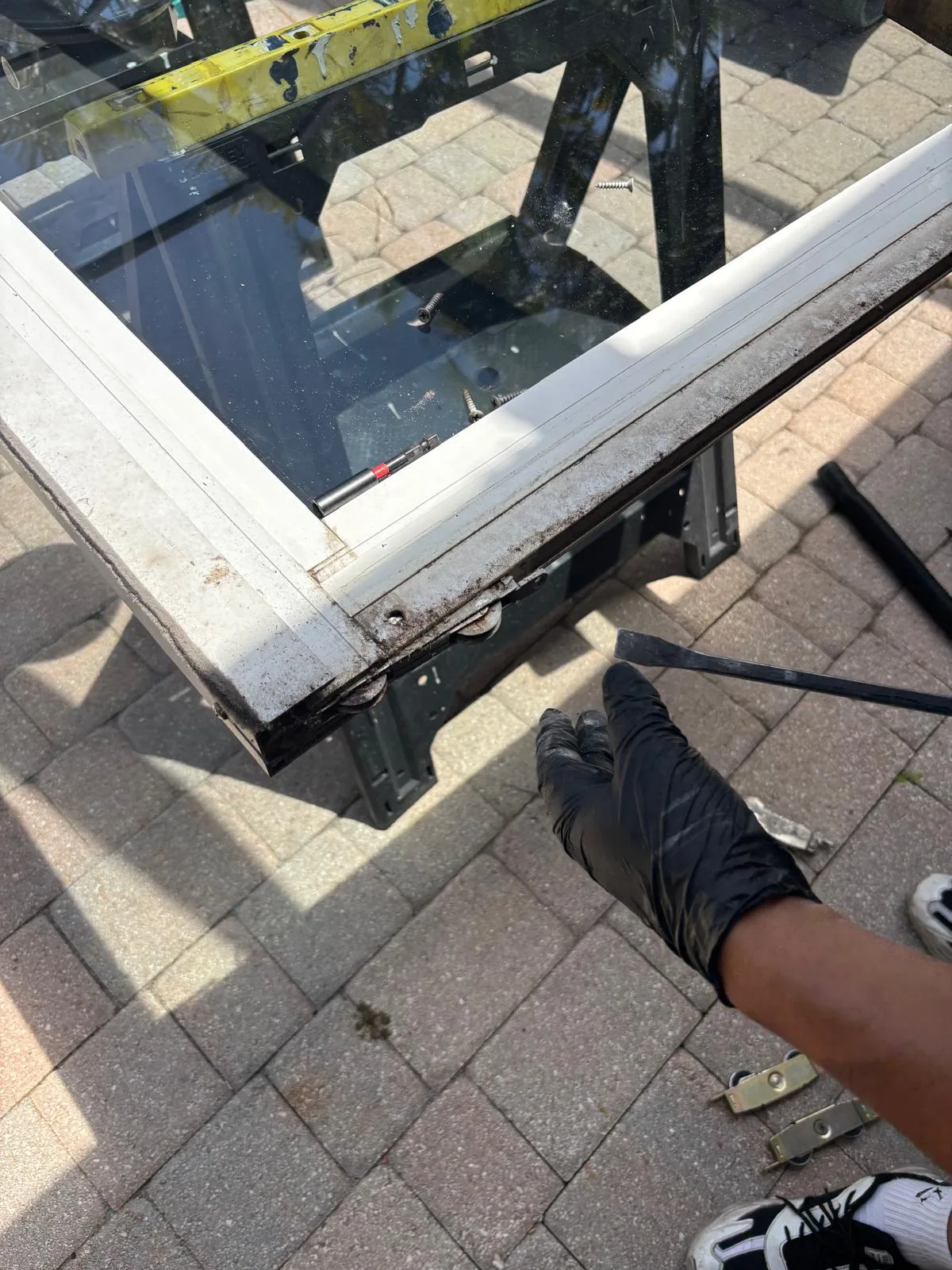
Tools and Preparation Before You Start
You'll need a Phillips head screwdriver, a flashlight, and someone to help steady the door if it's a large panel. Clear the track of dirt and debris before making adjustments. Having a vacuum handy helps clean out years of accumulated sand and grime from the bottom track.
Check your door brand first since adjustment screw locations vary slightly. PGT, CGI, and Andersen doors common in Port St. Lucie typically have screws on the side edge near the bottom corners. Pella and JELD-WEN models sometimes place them on the bottom face of the door.
Finding the Adjustment Screws
Open your door halfway and look at the bottom edge on both sides. The adjustment screws are usually recessed holes that accept a Phillips screwdriver. Some doors have small plastic caps covering these holes that pop off with a flathead screwdriver.
Safety Considerations for Heavy Impact Glass
Florida building code impact glass panels are significantly heavier than standard doors. Never adjust only one side completely before touching the other, as this creates an uneven angle that can crack the glass. Make small adjustments to both sides, alternating between left and right rollers.
Step-by-Step Adjustment Process
Start by turning each adjustment screw clockwise about five full turns. This raises the door off the track and takes pressure off the rollers. You should see a small gap appear between the bottom of the door and the track as you turn.
Once raised, slide the door back and forth to test how it feels. Then slowly lower it by turning the screws counterclockwise, making equal adjustments on both sides. The goal is to have the door just barely touching the track while rolling smoothly.
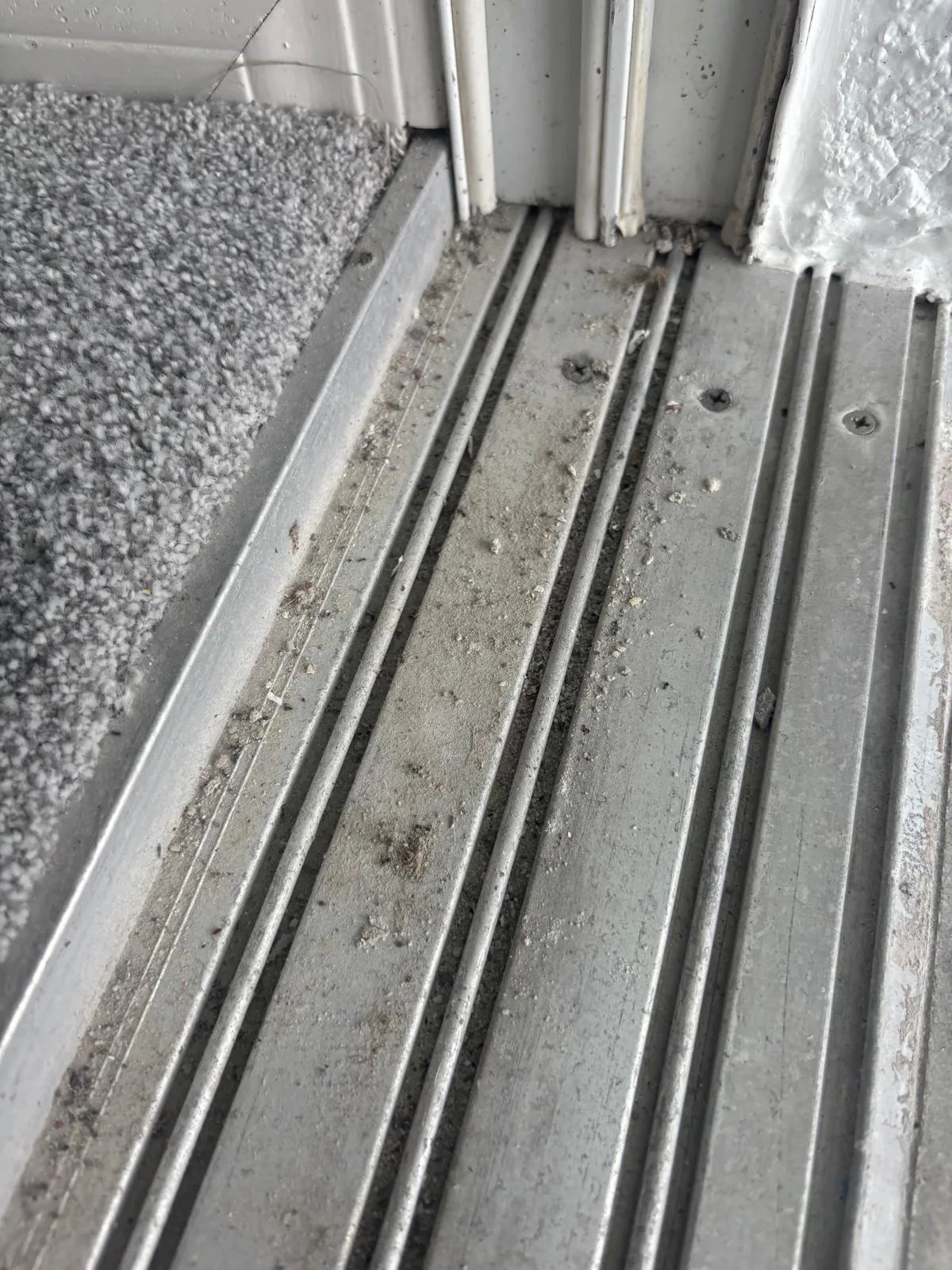
How to Raise Lower Sliding Glass Door Panel for Different Problems
If your door drags on the latch side, raise that corner slightly higher than the hinge side. Doors that won't lock usually sit too high and need to be lowered so the lock aligns with the strike plate. Test the lock after every quarter-inch adjustment.
Doors that jump off the track when opening need to be lowered significantly. Conversely, doors that scrape the bottom track or threshold need to be raised. The sweet spot leaves about a credit card's thickness of clearance between the door bottom and track.
When Adjustment Screws Won't Turn
Stripped or corroded screws are common in South Florida coastal areas due to salt air exposure. If screws won't budge, spray penetrating oil and wait 15 minutes before trying again. Forcing a stripped screw will damage the roller housing and require professional replacement.
Common Mistakes That Damage Your Door
Over-tightening adjustment screws can crack the roller housing or bend the door frame. Stop turning immediately if you feel strong resistance. Each full turn typically moves the door about 1/16 inch, so small adjustments make a big difference.
Adjusting a door with worn-out rollers wastes time and won't solve the problem. If you hear grinding, see visible wheel damage, or the door still drags after proper adjustment, the rollers need replacement. Professional roller replacement in Port St. Lucie typically runs $199-$299 per panel depending on the door brand.
Related services from Port St. Lucie Sliding Door Repair:
Professional Door Alignment Services in Port St. Lucie
Marco Delgado at Port St. Lucie Sliding Door Repair has helped Tradition homeowners with stubborn alignment issues since 2018. Sometimes the track itself is bent, the frame has settled, or Milgard and CGI brand doors need specific adjustment techniques. Professional alignment service costs $99-$199 and includes track cleaning, roller inspection, and lock testing.
If your DIY adjustment doesn't solve the problem or you're uncomfortable working with heavy impact glass, call (772) 297-0543 for same-day service. Marco serves all of St. Lucie County from his Port St. Lucie location, and for Martin County residents, treasurecoastslidingdoorrepair.com offers the same quality service.