(772) 297-0543

Why is my sliding door track rusting in the Florida humidity

Same-Day Service
Free Estimates
All Major Brands
Residential & Commercial
Licensed & Insured
TL;DR

Sliding door track rusting in Florida humidity occurs because salt air and moisture penetrate the protective coating on aluminum and steel tracks, especially under heavy impact glass doors. South Florida's coastal environment and temperatures above 80°F with high humidity create perfect conditions for corrosion. Professional track replacement typically costs $149-$349 and prevents door failure.

Sliding door repair in Fort Pierce FL

Your sliding door track rusting in Florida humidity is caused by constant exposure to salt air, moisture, and heat that breaks down the protective finish on metal components. Port St. Lucie's location near the Atlantic Ocean means salt particles travel inland and settle on your door tracks, creating an electrochemical reaction that produces rust. Once the protective anodized coating on aluminum tracks or galvanized finish on steel tracks is compromised, corrosion spreads rapidly.

The problem intensifies with impact-rated glass doors common in St. Lucie County homes built after 2002, which weigh 150-300 pounds per panel. This constant pressure on corroded tracks creates grinding metal contact that accelerates deterioration. Within months, a small rust spot can prevent your door from sliding smoothly or locking properly.

How Salt Air Causes Track Corrosion in Coastal Areas

Salt particles from the Atlantic Ocean travel up to 10 miles inland, reaching every neighborhood in Port St. Lucie and Fort Pierce. These microscopic particles land on your sliding door tracks where they absorb moisture from Florida's humid air, creating a corrosive brine solution. This saltwater mixture eats through protective coatings much faster than regular moisture alone.

Most sliding door manufacturers like Andersen, PGT, and CGI use anodized aluminum or powder-coated steel for their tracks. While these finishes provide good protection initially, any scratch or chip from debris becomes an entry point for salt and moisture. South Florida homeowners typically see rust develop within 3-5 years on standard tracks, compared to 10-15 years in drier climates.

Why Impact Glass Doors Rust Faster

Hurricane-rated impact glass required by Florida building code since 2002 weighs significantly more than standard glass panels. This extra weight creates constant downward pressure on the track, grinding away protective coatings at contact points. Every time you open or close a 200-pound PGT or CGI impact door, metal rubs against metal where the coating has worn thin.

Temperature Fluctuations Speed Up Oxidation

Port St. Lucie's daily temperature swings cause metal tracks to expand and contract repeatedly throughout the year. This constant movement creates microscopic cracks in protective finishes where moisture enters. When combined with humidity levels above 70% most of the year, these small cracks become major rust points within months.

Common Signs Your Track Has Corrosion Damage

The first sign is usually a reddish-brown discoloration appearing at the bottom of the track channel where water pools after rain. You might notice the door becomes harder to slide, especially after humid weather or morning dew. Gritty residue on your fingers after touching the track indicates active oxidation.

Advanced corrosion shows up as pitting or flaking metal in the track groove where rollers travel. Your door may jump or stick at certain points along its path, or refuse to latch properly at the lock point. In severe cases, the track can actually warp or crack from structural weakening caused by rust expansion.
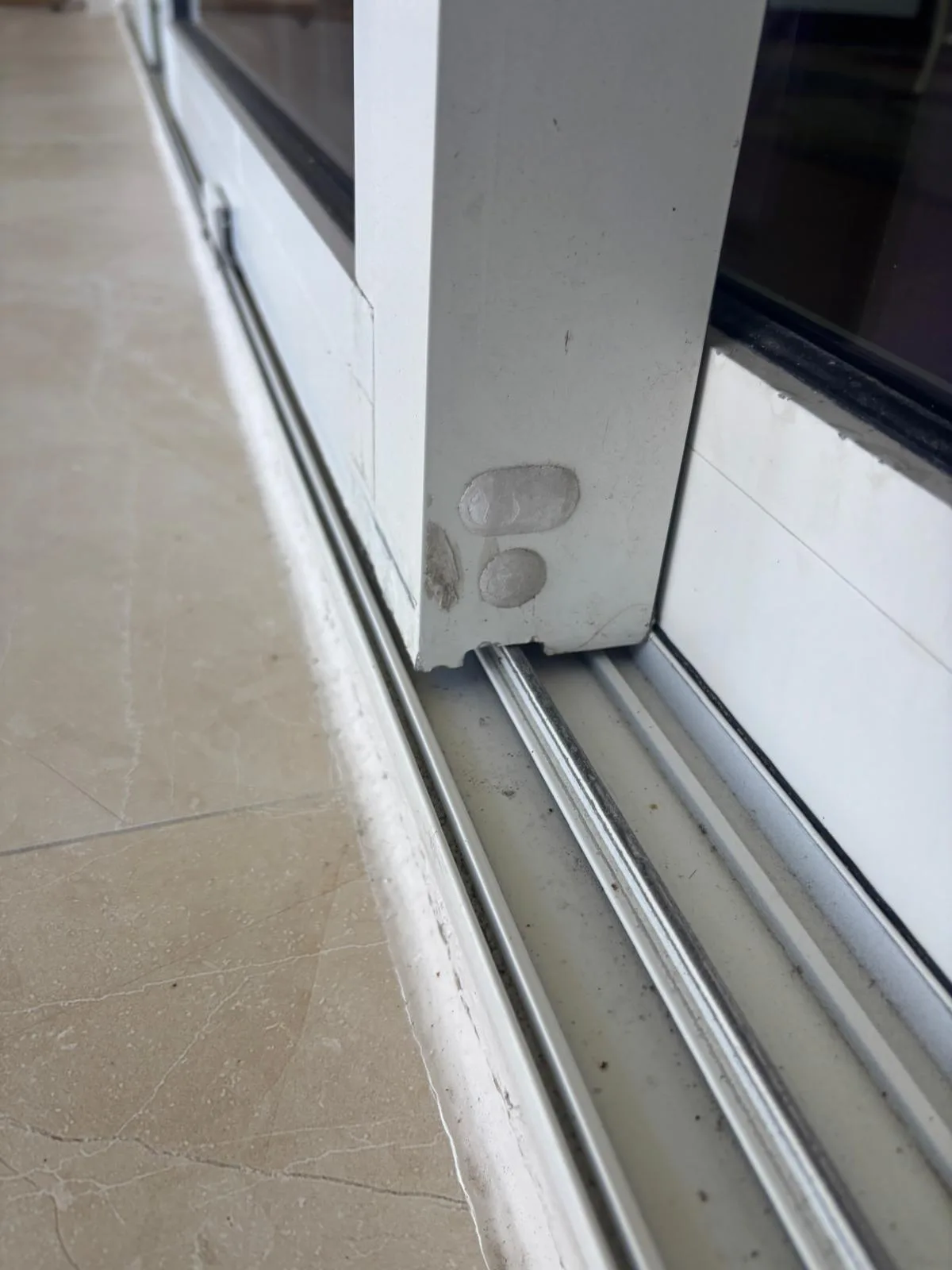
Sliding door components being serviced in South Florida

Why DIY Rust Removal Often Makes Things Worse

Many homeowners try sanding or wire brushing rusted tracks, which removes more of the protective coating than the rust itself. Without proper resealing, these abraded areas corrode even faster than before. Chemical rust removers sold at hardware stores can also damage the aluminum or leave residue that attracts more moisture.

Painting over rust without proper surface preparation just traps moisture underneath, allowing corrosion to spread hidden from view. The weight of impact glass doors from brands like Pella, Milgard, and JELD-WEN requires professionally installed tracks rated for the load. Amateur repairs typically fail within weeks when subjected to this constant stress.

When Track Replacement Becomes Necessary

Once rust has created pits deeper than 1/16 inch or spans more than 30% of the track length, replacement is more cost-effective than repair. Severely corroded tracks can damage your door's rollers, which then require replacement at $199-$299 per panel in addition to track work. Addressing track corrosion early prevents these cascading repair costs.

Preventing Future Rust in Your Replacement Track

Professional track installation includes proper drainage slope and weep hole positioning to prevent water accumulation. Stainless steel tracks cost more upfront but last 20+ years in salt air environments compared to 5-7 years for standard aluminum. Applying marine-grade lubricant quarterly creates a moisture barrier that protects the track surface.

Regular cleaning removes salt deposits before they absorb moisture and start the corrosion process. A simple rinse with fresh water every month washes away accumulated salt particles from the track channel. Professional maintenance services run $89-$159 and include track inspection, cleaning, lubrication, and roller adjustment to maximize door lifespan.

Professional Track Repair in Port St. Lucie

Marco Delgado has been repairing sliding door tracks throughout St. Lucie County since 2018, working on every major brand installed in South Florida homes. Port St. Lucie Sliding Door Repair offers track replacement services starting at $149-$349 depending on door size and track type. Marco carries stainless steel upgrade options for homeowners who want superior corrosion resistance.

Track problems only get worse with time as rust spreads and damages other door components. Call (772) 297-0543 for same-day assessment of your corroded track and a firm quote on repair or replacement. For Martin County residents, treasurecoastslidingdoorrepair.com provides the same quality service north of St. Lucie County.

Frequently Asked Questions

How long does it take for sliding door tracks to rust in Port St. Lucie?
Most aluminum tracks in Port St. Lucie show initial rust signs within 3-5 years due to salt air exposure, with accelerated corrosion near the coast. Impact glass doors weighing 150-300 pounds can develop track rust even faster, sometimes within 2-3 years, because constant pressure wears through protective coatings. Regular cleaning and maintenance can extend track life to 7-10 years before replacement becomes necessary.
Can I just paint over the rust on my sliding door track?
Painting over rust without proper surface preparation traps moisture and allows corrosion to continue underneath the paint layer. The constant friction from door rollers quickly scrapes away any paint applied to the track surface. Professional track repair involves either replacing the corroded section or installing a completely new track rated for your door's weight, which costs $149-$349 depending on the door configuration.
Why do tracks rust faster on impact glass doors?
Impact-rated glass doors required by Florida building code since 2002 weigh 150-300 pounds per panel, creating constant pressure that grinds away protective coatings on tracks. This heavy weight combined with salt air and humidity in Port St. Lucie accelerates wear at contact points where rollers travel. Standard glass doors typically weigh 80-120 pounds and cause less abrasion to track surfaces over time.
What type of track material resists rust best in Florida?
Stainless steel tracks provide the best corrosion resistance in South Florida's salt air environment, lasting 20+ years compared to 5-7 years for standard aluminum. Marine-grade aluminum with heavy anodizing offers a middle option that costs less than stainless while outperforming standard tracks. The upgrade cost typically adds $100-$200 to track replacement but eliminates recurring rust problems for decades.
How much does track replacement cost in Port St. Lucie?
Professional sliding door track replacement in Port St. Lucie typically costs $149-$349 depending on door size, track type, and whether you choose standard aluminum or stainless steel material. This price includes removal of the corroded track, installation of the new track with proper drainage slope, and adjustment of door rollers for smooth operation. Getting track replacement done before severe corrosion develops prevents additional repair costs for damaged rollers or door panels.
Does salt air from the ocean really reach inland to Port St. Lucie?
Salt particles from the Atlantic Ocean regularly travel 5-10 miles inland, easily reaching all of Port St. Lucie and Fort Pierce in St. Lucie County. Prevailing easterly winds carry microscopic salt spray that settles on surfaces throughout the area, not just at the beach. This salt accumulation combined with Florida's high humidity creates the corrosive conditions that cause sliding door track rusting even in neighborhoods several miles from the coast.
MD
Marco Delgado
Sliding Door Repair Technician. PSL Native. Solo since 2018.

Marco grew up in Port St. Lucie and learned the trade from his uncle Ray in Jensen Beach. He has been running his own repair operation since 2018, servicing St. Lucie County homes and HOA communities. For Martin County jobs, he refers customers to Treasure Coast Sliding Door Repair.

Need a Sliding Door Fixed in Port St. Lucie?

Marco services all of St. Lucie County. Same-day appointments available on most repairs. Call for a free estimate before scheduling.

(772) 297-0543