Why Your Sliding Door Swells During Florida Summers
Wood and composite door frames absorb moisture from humid air, causing dimensional changes that tighten tolerances. A wooden frame can expand up to 1/8 inch across its width during peak humidity, creating enough resistance to make a 200-pound impact glass door nearly immovable. This expansion is reversible but repeats annually.
Aluminum frames on brands like PGT and CGI resist swelling themselves, but wooden subframes and trim pieces still expand. Homes built after 2002 with Florida building code-required impact glass face additional challenges because heavier panels need tighter tolerances. Any swelling that would barely affect a standard door creates significant drag on impact-rated units.
The Role of Humidity in Door Operation
South Florida summer humidity regularly exceeds 80%, saturating porous materials throughout your home. Door frames continuously exchange moisture with surrounding air, swelling during humid periods and contracting when air conditioning reduces indoor moisture. This cycle stresses joints and can warp frames over years of repetition.
Impact Glass Weight Considerations
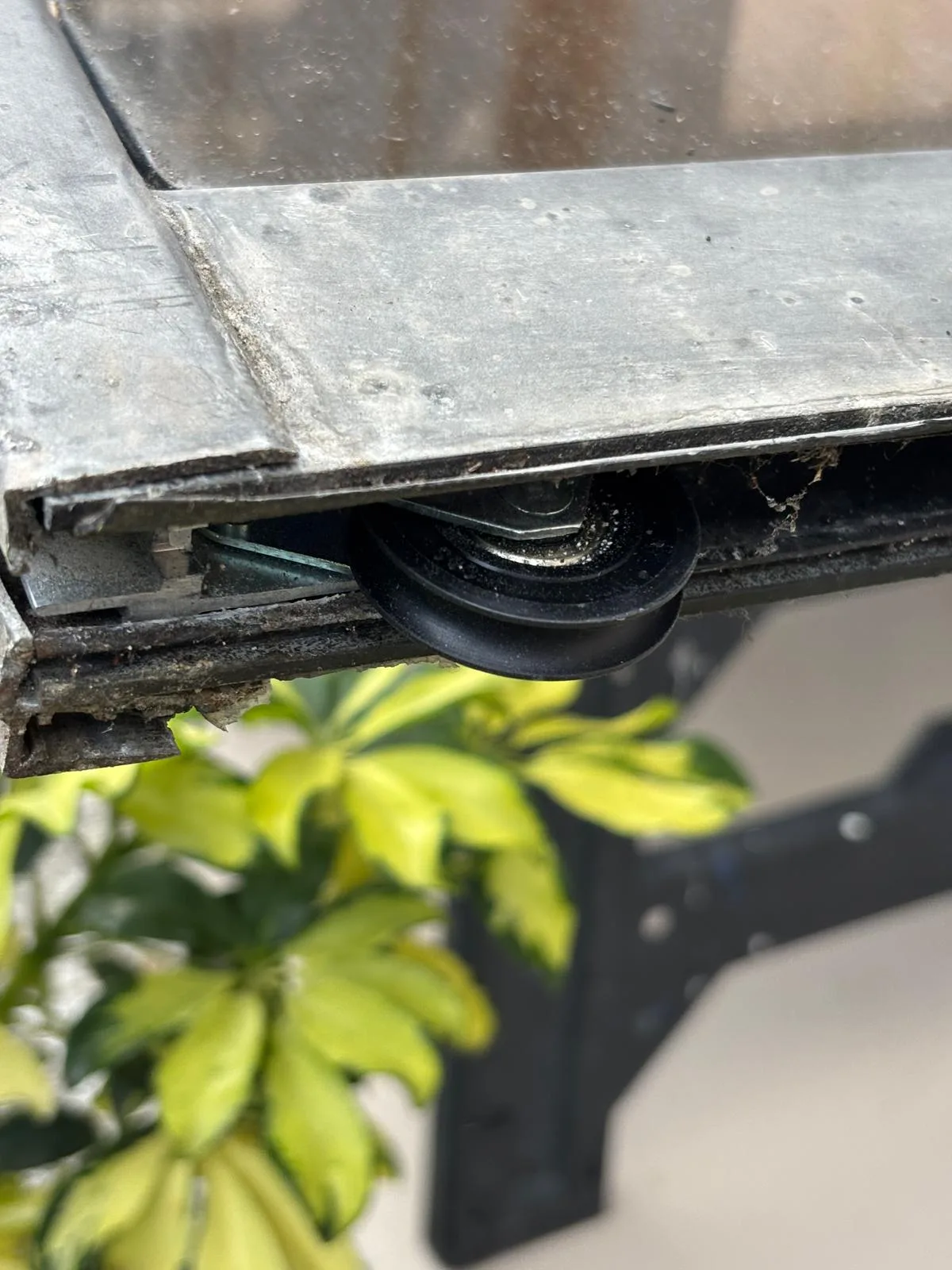
Hurricane-rated sliding doors in Port St. Lucie weigh significantly more than older single-pane units, requiring optimal roller and track conditions. When frames swell, the added friction can bend tracks or flatten roller wheels. Brands like Andersen and Pella design their systems with tight tolerances that work perfectly when properly maintained but fail quickly when components wear or frames distort.
How Seasonal Swelling Damages Sliding Door Components
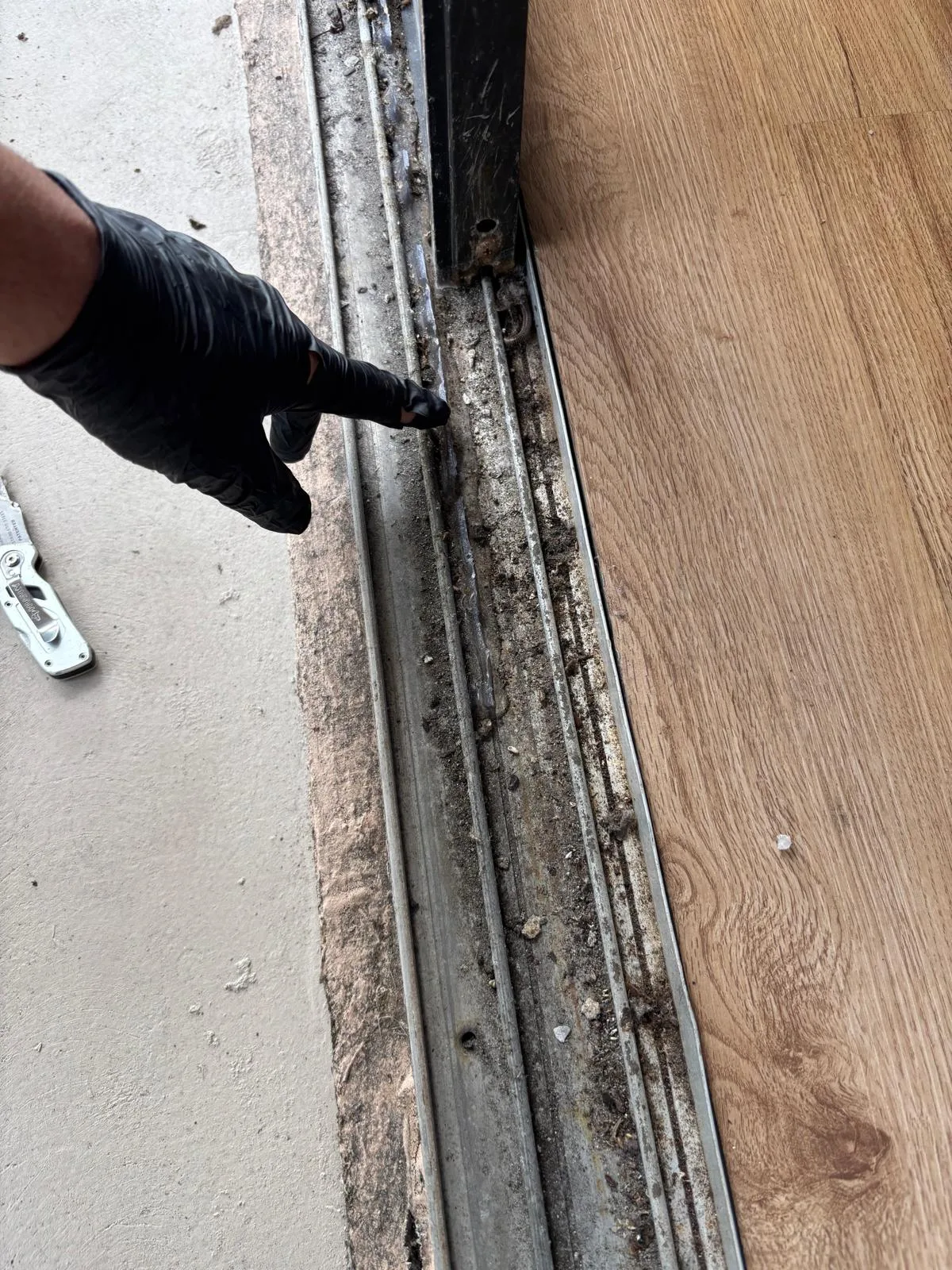
Repeated swelling cycles stress door hardware beyond normal wear patterns. Rollers designed to carry weight vertically also experience lateral pressure when frames tighten, causing premature bearing failure. Track channels bend slightly under this pressure, creating permanent low spots where doors catch and stick.
Lock mechanisms suffer when doors no longer align properly with strike plates due to frame distortion. Forcing a swollen door closed can crack the lock housing or bend the latch mechanism. These secondary damages often cost $129-$229 to repair, far exceeding the price of preventive maintenance at $89-$159.
Effective Prevention Methods for Seasonal Door Swelling
Apply marine-grade sealant to exposed wooden frame components every 18-24 months to create a moisture barrier. Clean and vacuum tracks monthly during summer to remove debris that compounds friction problems. Lubricate rollers and tracks with silicone spray rather than oil-based products that attract dirt.
Maintain consistent indoor humidity between 45-55% using your air conditioning system to minimize expansion cycles. Inspect weatherstripping annually and replace deteriorated sections that allow humid outdoor air to contact frame components. These simple steps prevent most swelling-related problems without professional intervention.
When to Schedule Professional Maintenance
Annual professional maintenance before summer humidity arrives addresses wear patterns before they cause sticking. A technician inspects roller condition, measures track alignment, adjusts panel fit, and applies appropriate lubricants for $89-$159. This service prevents the frame distortion and component damage that leads to expensive repairs later.
Immediate Fixes When Your Door Already Sticks
Clean tracks thoroughly with a stiff brush and vacuum, then wipe with rubbing alcohol to remove residue. Apply silicone spray lubricant to both tracks and visible roller assemblies, working the door back and forth to distribute the product. Check if the door is rubbing against the top channel, which indicates frame swelling rather than just dirty tracks.
If cleaning and lubrication provide only temporary relief, the rollers likely need adjustment or replacement ($199-$299 per panel). Attempting to force a stuck door risks cracking the glass or bending the frame beyond simple repair. Worn rollers on heavy JELD-WEN or Milgard impact doors can damage tracks, turning a simple roller replacement into a $149-$349 track repair.
Related services from Port St. Lucie Sliding Door Repair:
Professional Help for Persistent Sticking Problems
Marco Delgado at Port St. Lucie Sliding Door Repair has serviced hundreds of swollen and sticking doors throughout Indian River Estates since 2018. As a solo operator and PSL native, Marco provides personalized service that addresses both immediate sticking and underlying causes. He identifies whether your door needs simple maintenance, roller replacement, or track realignment.
Call (772) 297-0543 for same-day diagnosis and transparent pricing on all repairs. Marco services all major brands including Andersen, PGT, CGI, Pella, Milgard, and JELD-WEN throughout St. Lucie County. For Martin County service, contact our partners at treasurecoastslidingdoorrepair.com.